Drift Racer: Real Car Driving
SKYVERTY COMPANY LIMITEDRacing
4.68.00 Reviews
- Version
- 1.0.8
- Installs
- 1.00M
- Age Rating
- Everyone
Screenshots
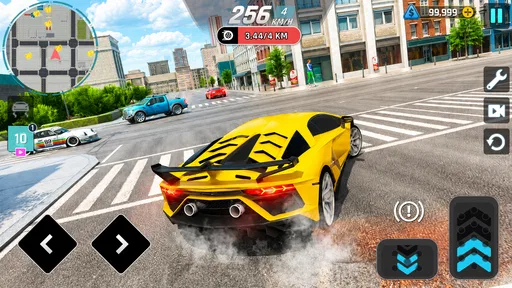
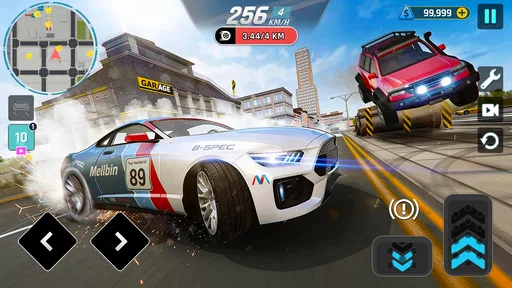
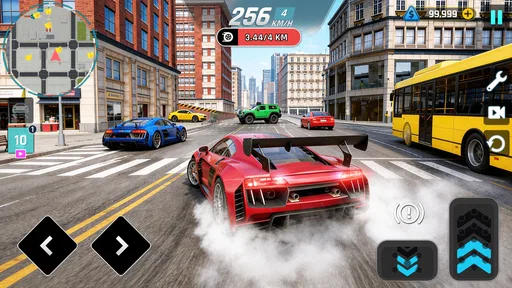
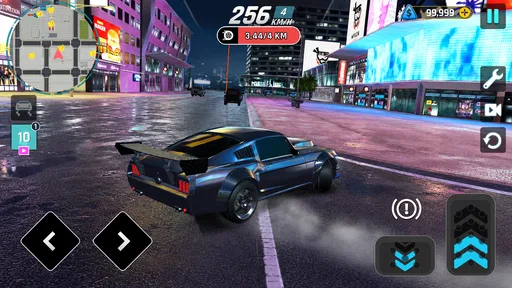
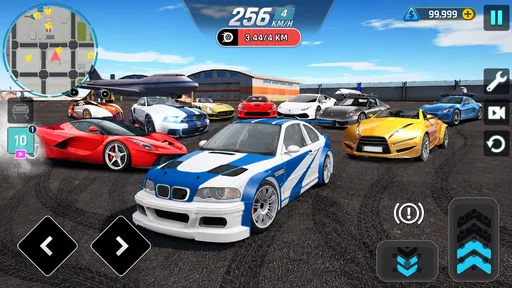
Our Review of Drift Racer: Real Car Driving
 Analysis by Appyee
Drift Racer: Real Car Driving makes its first impression by aiming for an easygoing open-world driving mood rather than presenting itself as a highly technical racing simulator. I found the appeal strongest when I treated each drive as a short escape: choose a direction, settle into the car, and enjoy the feeling of moving through a broad setting without turning every moment into a competition.
That distinction matters. This is a free racing game from SKYVERTY COMPANY LIMITED, and its store identity is built around drifting and open-world car driving. It is not the kind of experience I would choose when I want a carefully structured championship, licensed motorsport presentation, or a deep vehicle-tuning project. I would choose it when I want a relaxed driving session that can shift between cruising and playful slides.
The game is available for Everyone, which makes its basic presentation approachable for a wide audience. It has also attracted over a million installs and holds a 4.7 average from around two thousand ratings. Those figures suggest that the simple driving fantasy connects with many players, although popularity alone does not tell me whether it will satisfy someone looking for demanding simulation physics.
A first drive that favors freedom over ceremony
My first useful test with a game like this is not whether I can perform a perfect drift immediately. I look at how quickly it lets me understand the driving loop. Drift Racer: Real Car Driving works best when I stop expecting a long tutorial and instead learn through small experiments: how much steering to use, when to ease off, and how the car behaves once a slide begins.
That learning curve gives the game a casual rhythm. I can spend a few minutes practicing a corner, then switch to simply exploring. This makes it a practical choice for short sessions, especially when I do not want to remember a complicated progression system before having fun. The trade-off is that players who enjoy detailed onboarding, technical explanations, and tightly measured driving challenges may find the opening less satisfying.
The open-world idea also changes how I judge success. In a conventional racer, a missed corner usually means losing time. Here, a mistake can become part of the drive. I may take a wider line, recover, and continue exploring instead of restarting a race. That forgiving feeling is one of the game’s clearest strengths, but it also means the experience depends heavily on whether I personally enjoy making my own goals.
A realistic everyday use case is a short evening break. I can start a session intending to practice drifting for ten minutes, discover a route I like, and spend the rest of the time repeating that route with slightly different approaches. The game suits this kind of unplanned play better than a title that expects a full commitment to a race calendar.
Who will understand the appeal quickly
I would recommend it first to players who like the visual fantasy of driving through an open environment, experimenting with slides, and enjoying a car-focused atmosphere without needing a serious motorsport framework. It is also a reasonable starting point for someone new to mobile racing games because the central idea is easy to grasp: drive, steer, and find your preferred balance between control and spectacle.
I would be more cautious about recommending it to a player who wants exact real-world handling. A game can use the language of driving simulation while still prioritizing accessibility and mood. If your enjoyment comes from comparing tire behavior, braking points, suspension response, or detailed setup changes, a dedicated simulator will probably be a better match.
The same applies to players who need constant objectives. An open-world setting can feel refreshing at first, but it asks the player to create some of the momentum. If you prefer a clear sequence of events, visible targets, and frequent rewards, the free-form structure may feel quiet rather than liberating.
How the setting communicates its mood
The setting is important because the game’s identity depends on more than the act of turning a virtual steering wheel. An open driving space gives the car room to breathe. Instead of making every road feel like a narrow test, it encourages me to read the environment as a place to move through, circle back to, and use for informal practice.
I pay attention to how a driving game uses roads as visual sentences. A straight section creates anticipation, a bend invites a change of line, and a wider area gives me time to recover from an oversteer moment. Drift Racer: Real Car Driving benefits from this kind of environmental reading because drifting is not only about holding a slide; it is also about choosing where that slide makes sense.
That is one of the less obvious ways to get more from the game: do not treat every open stretch as a place to drive at maximum speed. Use different parts of the environment for different exercises. A broad section is useful for learning steering corrections, while a sequence of bends is better for practicing how early to initiate a drift. This turns free driving into a personal training routine without requiring a formal practice mode.
The setting also affects pacing. A tightly packed track would push me toward repeated attempts and immediate comparison. An open world gives me pauses between moments of concentration. I can drive intensely through a corner, then relax on the next stretch. That contrast keeps the mood from becoming exhausting and helps explain why the game feels closer to a driving playground than a traditional race ladder.
Still, freedom has a cost. When the environment is doing most of the work for the atmosphere, the experience can feel less focused than a purpose-built circuit racer. Players who love the clean visual logic of a track, where every barrier and apex has a competitive meaning, may prefer a more structured alternative. Here, the setting is valuable precisely because it is not always demanding my full attention.
Using the world as a personal route planner
I found it more rewarding to create small route ideas than to wander without a plan. For example, I might begin with a calm cruise, choose a section with several turns, and repeat it while changing only one habit at a time: entering slower, steering earlier, or releasing the controls sooner. This makes improvement easier to notice than trying to change everything during one dramatic run.
Another useful approach is to separate exploration from performance. On the first pass, I can learn the shape of the area without worrying about a clean drift. On the second, I can focus on linking turns. On the third, I can attempt a smoother run. This three-stage routine gives the open world a sense of progression even when I am not following a formal event structure.
That workflow is especially helpful on a phone, where small control errors are common. Rather than blaming the game after one awkward corner, I can use the environment to repeat the same situation and find out whether the problem was speed, steering timing, or a poor line. The game becomes more enjoyable when I approach it as a place to refine habits instead of a machine that must constantly entertain me.
Sound, rhythm, and the feeling of motion
Sound in a driving game does not need to be overwhelming to be useful. Its main job is to support the sense of movement and help separate calm cruising from a more committed corner. In my experience, the best mood comes when the audio leaves enough space for the environment and the car’s motion to remain readable.
That matters because drifting is a rhythmic activity. I turn in, unsettle the car, correct the slide, and return to a stable line. When the sound supports that sequence, the action feels intentional rather than random. The player begins to sense when a maneuver is building and when it is time to stop forcing it.
I also prefer to judge the audio as part of the game’s pacing rather than as a separate feature. A relaxed drive needs room between exciting moments. If every second were pushed toward maximum intensity, the open-world concept would lose some of its charm. The quieter stretches give the sharper turns more impact, and they make a short session feel less like a constant test.
One practical tip is to use the sound as a timing aid instead of watching the car alone. When I am learning a corner, I can listen for the change in the driving action and use that moment to decide whether to maintain the slide or reduce steering. This is not a replacement for visual control, but it can make the rhythm easier to understand, particularly after repeated attempts.
The limitation is that atmosphere cannot compensate forever for shallow mechanical variety. A pleasant soundscape and a coherent setting can make the first sessions inviting, but long-term interest still depends on whether I enjoy finding new ways to drive. If you need a wide range of events, cars, or competitive modes to stay engaged, the mood alone may not carry the experience for you.
Where the drifting mechanics fit
The central mechanical question is simple: does the driving feel good enough to support repeated experimentation? Drift Racer: Real Car Driving is most convincing when I use its handling as an accessible tool for expression. I can focus on the shape of a slide and the smoothness of a recovery instead of treating every mistake as a technical failure.
That accessibility is useful for casual players, but it changes the meaning of mastery. Mastery here is less about reproducing a professional racing technique and more about developing consistency with the game’s own response. I learn how much input produces a manageable slide, how quickly the car settles, and which corners give me enough space to correct.
A non-obvious trade-off appears when I compare controlled drifting with fast driving. A dramatic slide may look impressive, but it is not automatically the quickest or safest way through a bend. I get better results when I decide what I want from each corner before entering it. If the goal is style, I can accept a wider exit. If the goal is maintaining momentum, I need to keep the drift modest and leave room for correction.
This makes the game useful for players who enjoy self-imposed challenges. I can try to complete a route without touching the edges, keep every drift under control, or use a consistent line through a group of turns. These personal rules add depth without pretending that the game is a full competitive simulator.
Control comfort will naturally vary from player to player. On a touchscreen, an open-world drifter benefits from having space to recover, while narrow technical tracks would expose every small input problem. I would recommend spending the first session learning the controls at moderate speed rather than immediately chasing the biggest slide. That approach reduces frustration and gives a clearer sense of how the car responds.
How it compares with familiar racing alternatives
Compared with a conventional arcade racer, this game places more emphasis on wandering and informal practice. An arcade racer usually gives me a strong forward objective: finish first, beat a time, or complete a short event. Drift Racer: Real Car Driving offers a looser structure, so it is better when I want to decide what counts as a successful drive.
Compared with a serious simulator, it is easier to approach but less suitable for technical study. A simulator is the better option if I want realistic vehicle behavior, detailed setup decisions, or a strong connection to actual motorsport procedure. This game is better for a player who wants the sensation and visual language of drifting without turning the phone into a driving school.
Compared with a purely casual traffic or endless-driving game, its drifting focus gives the session a more deliberate skill element. I am not only avoiding obstacles or moving forward; I am trying to shape the car’s movement. That makes it more engaging for someone who likes practice and repetition, even if the game does not provide the competitive pressure of a race-focused title.
The best alternative therefore depends on the reason you play. Choose a structured racer when you need goals. Choose a simulator when precision is the main attraction. Choose this one when open driving and expressive drifting matter more than formal competition.
Practical fit for different players
The game is free, which lowers the barrier to trying its driving style. That is helpful because drifting is highly personal: some players enjoy the first loose corner immediately, while others need time before the handling feels natural. I can test the core experience without treating the purchase as a commitment.
Its age rating of Everyone also makes the presentation approachable for family-friendly play. I would still explain the game’s open-ended nature to a younger or less experienced player, because the main challenge is not understanding the theme; it is learning how to control a sliding car without overcorrecting.
The current version is 1.0.8, and the game requires Android 7.0 or later. That makes checking device compatibility a sensible first step before planning to play, particularly on an older phone. A racing game can feel very different depending on screen size, touch response, and general device comfort, so I would not judge the experience after only a few rushed minutes.
For a commuter or someone with short breaks, the game’s free-form structure is convenient. I can start driving without needing a long narrative setup. For a player who wants a deeper long-term project, I would suggest deciding in advance what kind of progression will keep the game interesting: route practice, cleaner drifts, exploration, or personal challenges.
I would skip it if my priority were online competition, an extensive career structure, or a detailed garage-management experience. Those expectations could make the open-world freedom feel like a lack of content rather than a feature. The game works best when I meet it on its own terms.
My atmosphere verdict
Drift Racer: Real Car Driving creates its strongest impression through the relationship between setting, sound, and unhurried driving. The world gives me room to experiment, the rhythm lets intense corners sit beside calmer stretches, and the drifting mechanics provide a clear reason to return to the same roads with a different approach.
It is not a universal replacement for every racing game. Its appeal is narrower and more specific: a free mobile experience for players who want open-world car movement, accessible drifting, and a mood that does not depend on constant competitive pressure. That focus is a strength when I want a relaxed driving playground, but a limitation when I need deep simulation or a packed schedule of objectives.
My recommendation is to begin slowly, use the environment as a practice space, and judge the game by how much you enjoy creating your own driving goals. Do not rush to make every corner spectacular. Smooth corrections, deliberate routes, and short repeatable challenges reveal more of the game’s character than one uncontrolled slide.
For me, the most coherent part of the experience is its pacing. It understands that a driving game can be enjoyable between the major moments, when I am simply moving through the setting and preparing for the next turn. If that kind of playable mood sounds appealing, this racing game is worth trying. If I wanted exact physics, formal competition, or a highly detailed automotive system, I would look elsewhere.
Overall, I see it as a friendly entry point into open-world drifting: easy to approach, flexible enough for short sessions, and more rewarding when I bring a little structure of my own. The strongest way to play is to treat every route as a small experiment and every drift as a question of timing, not just speed.
Verdict
Strengths of Drift Racer: Real Car Driving
- Responsive controls make drifting easy to learn.
- Wide car selection offers different handling styles.
- Short races work well for quick mobile sessions.
- Visual effects make crashes and drifts feel exciting.
- Offline play is useful when no internet connection is available.
Limitations of Drift Racer: Real Car Driving
- Some upgrades may require considerable grinding.
- Controls can feel overly sensitive on smaller screens.
- Track variety may become repetitive after extended play.
- Ads can interrupt the experience between races.
- Advanced cars may be difficult to control without practice.
Other Releases by SKYVERTY COMPANY LIMITED
View All
Titan Rope Hero: Vice City
Action4.3
Similar Picks in This Category
View All
Hill Climb Racing
Fingersoft4.3

Dr. Driving
SUD Inc.4.2

Traffic Rider
skgames4.5

Asphalt 8 - Car Racing Game
Gameloft SE4.6

Race Master 3D: Car Racing
Beresnev Games4.6

Extreme Car Driving Simulator
AxesInMotion Racing4.3
Frequently Asked Questions
What is Drift Racer: Real Car Driving?
Drift Racer: Real Car Driving is a mobile racing game focused on controlled slides, fast cornering, and stylish car handling. Instead of simply reaching the finish line, you are encouraged to maintain long drifts, link corners, and earn points while avoiding crashes. The game combines arcade-style controls with driving challenges, vehicle customization, and different environments designed for short, action-packed sessions.
Is Drift Racer: Real Car Driving easy for beginners to play?
The game is relatively easy to start because its controls are designed for touchscreens and do not require advanced driving knowledge. However, mastering drifting takes practice. Beginners may initially struggle with acceleration, steering sensitivity, and maintaining a slide without spinning out. It is worth experimenting with the available control options and starting on simpler tracks before attempting more demanding challenges.
Can I customize or upgrade the cars in Drift Racer: Real Car Driving?
Car customization and progression are important parts of the experience, although the exact options can depend on the version installed and the content unlocked during play. Players can generally improve their vehicles or change their appearance as they progress. Upgrades can make handling more comfortable and help with faster, more controlled drifts, while visual changes allow you to create a car that matches your preferred style.
Does Drift Racer: Real Car Driving require an internet connection?
Some features may work without a constant internet connection, making the game suitable for quick races while traveling or when mobile data is unavailable. Nevertheless, online access may be required for advertisements, updates, cloud-related functions, special events, or certain downloadable content. Before relying on offline play, it is a good idea to test the game after installation with Wi-Fi and mobile data disabled.
Is Drift Racer: Real Car Driving free to download and safe for children?
The game may be available as a free download, but free mobile racing titles can include advertisements, optional in-app purchases, or progression systems that encourage additional spending. Parents should check the store listing, age rating, and purchase settings before allowing children to play. Because gameplay involves fast driving and competitive challenges, younger players may also benefit from limited playtime and supervision.
Play our best games!


